Peptide High Quality: Value Of Third-party Recognition
Confirmed > 99% Lab-grade Peptides
It is one factor proper peptide storage and reconstitution practices matter. Partial peptide fragments can arise from insufficient synthesis or post-synthesis deterioration. These pieces are typically smaller than the target peptide and may elute at different retention times.Peptide pureness refers to the amount of the right peptide in the peptide item. However, for complete top quality analysis or the characterization of peptides for a selection of applications, extra logical tests are recommended. For instance, in order to ensure success in various peptide experiments, it might be necessary to eliminate trifluoroacetic acid (TFA), or to examine the solubility of hydrophobic peptides prior to executing the called for experiments. During the discovery, we utilize RP-HPLC integrated with MS to establish the molecular weight of the peptide. The outright quantity of the correct peptide in a sample is the product of the peptide web content and the peptide purity. BOC Sciences has a top-tier peptide high quality screening platform, integrating advanced analytical modern technologies and high-end instrumentation to offer specific and reliable peptide quality analysis solutions.
For scientists, obtaining validated peptides isn't simply a rule-- it's the foundation of reputable experiments and research study reproducibility. Poor-quality peptides (those with unseen pollutants, inaccurate series, or deteriorated components) can result in misleading information and irreproducible results. In fact, proteins and peptides are amongst one of the most commonly utilized laboratory reagents, yet research studies have shown that their quality is usually inadequate, resulting in inadequate information reproducibility. Starting with appropriate lab recognition is therefore an essential part of a researcher's quality assurance workflow.- As molecules exit the column, they pass through a detector-- typically a UV detector readied to 214 or 220 nm, wavelengths where the peptide bond soaks up light highly.
- When a combining stops working, the growing chain is capped to stop further elongation of the incorrect series.
- A height with the ideal retention time could theoretically be a relevant peptide with comparable hydrophobicity.
- If you have any type of concerns or specific requirements, please feel free to contact us.
- Various other strategies like electrophoresis, capillary electrophoresis (CE), and nuclear magnetic resonance (NMR) can additionally be used to examine peptide structure, fee, and purity, guaranteeing thorough characterization.
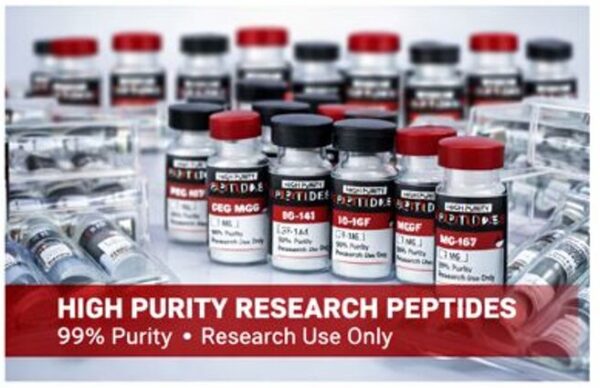
Many peptide vendors and research study laboratories depend on a number of well-established analytical methods. All products are sold for research study, research laboratory, or analytical objectives just, and are except human use. Item descriptions and classifications do not imply any healing outcomes. At Chameleon Peptides, every item ships with comprehensive third-party screening documents. You can discover more concerning our logical testing methods on our testing and quality web page. A 2016 survey released in Nature discovered that greater than 70% of researchers had actually attempted and failed to recreate an additional scientist's experiments.
Applications Of Our Expert Peptide Screening Solutions
HPLC can sustain insurance claims regarding chromatographic pureness, impurity peak concern, and degradation trends when the technique is suitable and the chromatogram is readily available. If a peptide is re-tested after storage tension, HPLC can expose whether new impurity optimals have actually appeared or whether the primary height area has declined. This links straight with taking care of subjects such as peptide storage space and peptide reconstitution. As an examples of product-level context, compare the anticipated masses for Retatrutide, BPC-157, and Semaglutide.Peptide Purity Analysis Service
BOC Sciences offers thorough peptide screening solutions to clients across markets, guaranteeing items meet rigorous market requirements and assuring item uniformity, safety, and efficacy. It additionally supports traceability-- each set's lab validation report can be linked to its COA and governing filings, producing a clear paper trail. Basically, extensive lab recognition is just how you prove to regulators that your peptide meets all quality specs. It helps stay clear of compliance concerns such as fallen short audits or item recalls because of top quality Sterile Water defects. This not only satisfies lawful demands but inevitably shields client safety and security.Quality Control For Researchers: Why It Begins With Validation

BOC Sciences offers multi-batch comparison analysis to assist clients develop basic material quality requirements and make certain consistency. Recurring non-peptide elements can transform assay interpretation, distort peptide web content computations, and make complex great deal certification. We sustain targeted analysis of pertinent residuals based upon the task and sample background.
The pureness of peptides is generally evaluated making use of high-performance fluid chromatography (HPLC). HPLC divides peptides based on their interactions with a stationary phase, allowing pollutants and spin-offs to be identified and measured. In addition, mass spectrometry (MS) can be used to validate the peptide's molecular weight and sequence, offering further confirmation of purity by identifying pollutants and deterioration products. If you have actually ever before acquired a synthetic peptide for a lab experiment, you've likely saw a pureness percentage on the certificate of evaluation-- generally worths like 95%, 98%, and even 99%. Peptide pureness is an important top quality metric that informs you what fraction of a peptide example is the desired item versus unwanted spin-offs. An example might generate a clean-looking chromatogram with one dominant optimal and still be the wrong substance if identification was never ever validated. HPLC steps splitting up and loved one peak area; mass spectrometry actions mass-to-charge behavior that can be made use of to confirm molecular identification. Peptide pureness screening is the procedure of validating that a peptide sample has only the intended sequence-- and no significant contaminants or results from synthesis. Due to the fact that peptides are produced via intricate chemical processes, trace contaminations can create naturally. Examining allows researchers to comprehend exactly what's in the vial, confirming both identity and high quality. Selecting a respectable third-party lab is crucial to obtaining trusted peptide recognition results.